Sunday, November 27, 2011

The Descendants Review


The Descendants
Directed by Alexander Payne
Released in 2011

If movies provide the ultimate escape, the success of writer-director Alexander Payne raises some questions. His films depict the frustrations of life through a witty, but unapologetically honest lens. Election admitted that the selfish prevail over the selfless. The two men in Sideways sipped fine, aged wine while their own aging lives descended to mediocrity. Payne’s latest film, The Descendants, ends on a note of optimism, but the hilly way there is littered with uncomfortable situations and harsh truths that carry loss, anger and ignorance. We have all lived in one of these scenes, whether as victim, aggressor or bystander. Perhaps the deserved distinction of this film and all of Payne’s works lies in how he captures moments we all know and feel, and without adorning the script with fake eloquence or resorting to caricature, sympathizes with both sides and reconciles them.

George Clooney has worked towards the role of Matt King in The Descendants for his entire career, but his arrival no less defies the suave bachelor archetype synonymous with his name. Clooney is a dad, and one with little confidence on how to raise his children or himself. The roles he played beforehand certainly offered no fathering tips. Passive and blind to his family’s needs, Matt must adapt his detached mentality to deal with a twofold crisis in his family. For one, a large parcel of virgin land on the Hawaii island of Kaua’i faces settlement. Calls of support from family real estate brokers and outcry from island natives clash. The product of random acts of dissemination, Matt has the final say if the land of his ancestors, dating back to Hawaiian royalty, will sell for a large sum. His comatose wife, thrown from a motorboat during a race, presents more pressing issues. Not only does the injury throw his wife’s fate into question and himself into the parenting spotlight, but other sources leak to him that she was not faithful. 

The curious question as to how any woman would cheat on George Clooney withstanding, Alexander Payne uncovers the rawest of feeling in realistic situations, just like us. In a breakout performance that may open doors for Oscar, Shailene Woodley, as daughter Alex, sobs in a pool, and the camera follows her under water as she unleashes a primal scream. Alex’s boyfriend Sid (Nick Krause) tags along as the family visits Matt’s in-laws to discuss serious matters, and he laughs in disbelief at the painful dementia of the grandmother. You just want to punch the kid; Robert Forster, playing the dad, kindly provides the knockout.

Heavy the film hits, it still aims for comedy. Like his dramatic scenes, Payne mines for laughs in the most banal of circumstances. Payne finds the way people run funny, as seen when Paul Giamatti shuffles down a hill in Sideways and here when Matt awkwardly sprints through a neighborhood. Matt’s youngest daughter Scottie (Amara Miller), the last remnant of (rapidly fading) innocence in the family, interjects with out-of-place comebacks and dirty words beyond her comprehension. Scottie turns depressed from her family’s troubles, and instead of offering words of comfort, her teachers and peers’ parents scold Matt for not containing his daughter’s pain. They say she scares their own children. When ignorance passes as wisdom, sometimes laughing at the fool is the only option. Ask Michael Scott from The Office.

These quirks and flaws of character either change or prove endearing as a method to cope. Sid’s initial idiocy may just be his bewildered tact after his own substantial loss. Alex’s verbal fistfights with her whole family slacken as she directs her rhetoric to those who have wronged her loved ones. And Matt, all bottled-up and ready to explode, lets loose at last on just about everyone, including his unconscious wife. He feels a catharsis in expressing how he actually feels, but evolves to control this outlet by leading an open life with the important people he has left. He takes ownership of what he never had, similar to his dilemma regarding the land entrusted upon him, the land of the family he appreciates but does not know. 

If there is any place for some soul-searching, Hawaii is it. Cinematographer Phedon Papamichael keeps the camera at eye level, capturing beautiful scenery with beautiful shots that immerse but do not canonize. These characters have lived here all their life, and love it they do, it is not a vacation vista but home, imperfect as any. Urban strips of Honolulu, while a far cry from South Central, are not tour brochure-material, grounding the land of paradise with locations that could be anywhere. In one of the many, nonintrusive voiceovers, Matt asks the rest of the world if they think “our cancer is any less fatal?” Pain knows no boundaries, in gorgeous places and to gorgeous people.

This film lacks a certain drive in the beginning, and takes a few plot points to start to congeal into the film I admire. It is nothing I can exactly place my finger on, but the dialogue picks up its wit and the actors truly explore their roles once they are given space to breathe. The slow setup puts the pieces in place, and only then can the artists on and off-screen form the melancholic portrait. It’s curious how this film escalates in form and precision alongside the characters as they mature from imperfect souls to as close to perfect as they have ever been. Both the film and the characters, one in the same, hit their peak right before the credits roll, and you wonder if — and really, really hope — they will continue to improve, even after we have stopped watching. 

Final Verdict:
4 Stars out of 5

Thursday, November 17, 2011

The Mill and the Cross Review

The Mill and the Cross
Directed by Lech Majewski
Released in 2011

The unlikeliest of outlets introduce classic art to the world today. Spongebob acquainted the pajamaed youth with Nosferatu. A football spectator holds up a sign “John 3:16” and Google breaks with queries. The work of 16th century Flemish painter Pieter Brueghel the Elder received a revival of sorts with the success of the indie folk band Fleet Foxes and their eponymous debut album, which featured Brueghel’s chaotic Netherlandish Proverbs as its cover. Contemporary exposure to antiquated art through these casual mentions and jabs resurrects what may have been forgotten and makes it, dare I say it, fashionable. This all operates on the surface level, however, and cannot be substituted for modern analysis. The Mill and The Cross elevates the conversation and literally steps inside Brueghel the Elder’s work for a beautiful, haunting, and very perplexing study of a genius. 

That being said, this film sides more on the side of art appreciation than evaluation. Tracking Brueghel’s process on one of his masterpieces, The Procession to Calvary, the film takes a minimalist approach. Director Lech Majewski tosses potent images onto the screen and lets them speak for themselves. The camera views its many actors from a distance, not unlike the broad, noisy works of Brueghel. Beloved cineaste techniques like deep focus give the audience the choice of where to pay attention. This detached style evokes the artist’s own and stirs awe in the vast amount of details Brueghel pained over on his vast canvas. It eschews didactics as a result - not a poor choice - but manages to focus more on the aesthetic brilliance of Brueghel’s work rather than its broader implications. 

Or perhaps it does. The film lacks a typical narrative, so no value can be gleaned from the plot or character progression. Brueghel the Elder was affectionally known as “Peasant Brueghel” for his attention and glorification of his own social strata, and the filmmakers know this. There is little to no dialogue for periods as long as 25 minutes at a time. These durations, which are not a bore but more a hypnotic curiosity, depict the mundane, cruel and even goofy lives of the peasant through beautiful lens. It is not unfair to say that the beginning, which follows many families slowly waking up and starting their day, moves lethargically and tests the patience. Stay with it. 

The pure beauty of these scenes, captured by cinematographers Adam Sikora and Majewski himself, speaks on a more intimate level, in a way justifying the film’s aesthetic priorities. The opening scene, in which Brueghel - played by the immensely talented Rutger Hauer from Blade Runner and, yes, Hobo with a Shotgun - walks through a tableau of his painting with his patron (Michael York), stuns. Brueghel approaches a woman, frozen in place, to adjust the train of her dress. There is no apparent motive for this action, but he feels it necessary and continues to tweak the trivial as he sees fit. Brueghel cared about the smallest of details even when his range presented so many. There are two scenes where the action halts like this, stepping back to appreciate the meticulous craft of the artist. They stand as the most impressive, searing into the memory, and support Majewski’s distant study of Brueghel, raising questions to his art but not providing answers. No one has them, after all. 

Christian imagery serves as the director’s language of sorts; don’t forget the subject of the film is a painting called The Procession to Calvary. Scenes of shocking brutality appear suddenly and disturb more for the apathetic viewpoint the camera takes than the actual violence. It is not that a man being whipped dozens of times pours buckets of blood, but that the heinous act is really not a big deal. This reflects the minuscule presence of Jesus himself in the painting, easily glossed over on a casual glance. Strong visual metaphors will resonate personally with those who have a passion for art history or Christianity.

The windmill towering above the subjects of the painting, and inspiring half of the film’s title, finds its way into many shots. Whether Brueghel studies a valley of peasants below or a woman mourns the loss of her son in her own home, the windmill stares across fields, through windows and under arches. Brueghel comments that instead of showing God staring from the heavens, in his painting he wants a mortal - the miller, framed with such commanding, vertical shots reminiscent of the religious drama Black Narcissus - perched atop his windmill to be the all-seeing eye. The characters cannot hide from judgment, just as the film cannot escape Brueghel’s own influence. 

Lech Majewski tackles this subject through little more than visuals, moving portraits. Taking on a genius at his own game will not end well. In that sense, The Mill and the Cross does not analyze art but praises the artist’s dreams and the admirer’s dedicated struggles to decode them. Brueghel’s painting comes alive and Majewski invites us to marvel at the detail and heart an artist infused on a scene so sad.

Final Verdict:
4 Stars out of 5


This review was originally written for The Cornell Daily Sun and can be viewed at its original location via this link.

Tuesday, November 15, 2011

The Beach Boys' The Smile Sessions Review

The Smile Sessions
Artist: The Beach Boys
Released in 2011 (Recorded 1966-67)

I am not sure what the act and art of writing can achieve - my young mind has seen much yet so little to conclude: “a lot” - but to communicate the perfection of “God Only Knows” by The Beach Boys is out of its grasp. Yes, the lyrics are as central to its wonder as any other detail. The language is so simple and honest, with its pledge to love’s vitality only that much stronger by surviving past that questionable opening line, “I may not always love you....” But those surging horns and harpsichords, that abrupt transition to the bridge resolving into wordless chants of euphoria, the layered calls to god that might as well repeat forever ... every element equals the other to an effect that can only be expressed through song. That I contradict myself to attempt to describe it just underlines my fawning admiration. At the time, “God Only Knows” was praised for its unique arrangements. It speaks today for the value between those lines. The Smile Sessions, recorded 45 years ago but properly released just this month, bears both sides of praise. 

The struggles leading to this day are legendary, for Smile was the album that never was. When The Beatles released Rubber Soul in 1965, their American counterparts, or more accurately bandleader Brian Wilson, summoned all their might to top them. Pet Sounds was the result, and in the opinion of many, including yours truly, they succeeded. Well, in response landed Sgt. Pepper, which threw plans for their followup Smile, at least to Wilson, in chaos. Wilson’s mental collapse - he believed his music was responsible for a number of local fires - cancelled the ambitious project. In 2004, Wilson finally completed the album as a solo act, though about 40 years past his prime. But now the remaining Beach Boys have agreed to release what they did record all those years ago, mixing and mastering the tracks after the fact, but the long lost work is here.

The Smile Sessions may not contain Wilson’s exact, original vision, but it is the closest anyone will ever hear. “A teenage symphony to God,” Brian calls it, with adolescence and faith as the two dominating themes. “Our Prayer” opens, an a cappela hymn rift with beautiful harmonies and a divine presence. A far cry from the “Fun, Fun, Fun” days of the past. 

That is not to say Smile lacks those innocent, fresh-faced ditties, for they are here and many. The difference is in perspective, a much more somber tone and experimental approach. The titles are blatant and playful: “Wind Chimes” contains more shifts in instrumentation than the simplistic name would suggest, and “Vega-Tables” sounds like The Beatles’ “Piggies” on acid --- or I guess even more acid (McCartney apparently chomps celery into a mic here for the sound effects; wouldn’t surprise me if he was tripping). Tracks like “Child Is Father of the Man” though, with lyrics simply repeating the title over and over and ominous trumpets setting a rather frightening atmosphere, suggest Wilson and writing partner Van Dyke Parks have reached a new, serious appreciation for the youth they have passed. The scariest rendition of “You Are My Sunshine” I have ever heard attests to this. Many young bands dedicate an album to looking back at what they have left behind. Perhaps it is due to the liberal LSD use, but never has a tribute to youth sounded so solemn and, even, desired. Wilson was battling some demons of his own at the time. 

While many of these tracks never saw a proper release until now, when the studios saw single potential, they released the best of the bunch independently. Thankfully, this release contains extended, rare versions of even these hits. “Heroes and Villains” still churns like a baroque candy assembly line, but with an added verse endorsing good ol’ inebriation. The original single now feels rushed - and with too few drunken verses - compared to the flow of this version. “Good Vibrations” closes the album, and its avant-garde style sounds at home amongst such odd company.

“Surf’s Up” stands tall as the best song on Smile, and among the greatest of the band’s entire catalog. Written in one night on the piano Wilson situated on a sandbox, “Surf’s Up” moves freely from one sound to the next, grand pauses here and there to best even the madness of “Good Vibrations.” How serene the song is really, with Brian’s beautiful falsetto - admirable but lacking in his 2004 effort - peaking on the equally gorgeous but ambiguous line “Columnated ruins domino.” Decoding all the images of Van Dyke’s aesthetic lyrics takes the insight of a Heraclitus scholar, and even then you’re throwing darts at a dictionary. Enjoy the song like a natural wonder, grateful to witness and bask in the grandeur beyond your cognizance. As Wilson swoons, “I heard the word/wonderful thing/a children’s song” (I believe we have struck a theme!), and descends into a fading “na na na” spiral, even he fails to find words for its beauty. 

You will never be this happy.
You can will purchase The Smile Sessions in two main formats. The first is a two CD collection that contains all of the above and much more. The other option is an exhaustive five CD collection, complete with an additional two LPs and 7 inch singles, each. The latter befits its high asking price with a unique look into the creative progress of The Beach Boys’ most notorious effort. Hear Brian Wilson cut into the harmonies of Mike Love when his line was off, or ask his fellow Boys, “Do you feel the acid yet?” before kicking into song. The later tracks are rough, stopping irregularly for Brian to instruct or improvise. It makes for an atypical listening experience, but shows the creativity, and struggles, of Brian Wilson uncensored, uncut. When choosing between the two different versions, though, ask yourself if you need a full CD of “Good Vibrations” demoes. If not (I don’t know where even I stand), go for the basic edition. There are plenty of behind-the-scenes tracks even for the average consumer. 

There reaches a point in every music lover’s career when the surprises and hidden gems hit less and less. Little ground is left to cover. How pleasing, then, to hear a bonafide classic for the first time in 2011. The direct sincerity of Smile’s lyrics may be lost in our postmodern and ironic outlooks on the past, present and future. Be humble; The Smile Sessions presents songs dripping with equal cheer and melancholy. Wilson and Van Dyke’s compositions progress untraditionally even for a modern day Sigur Rós and Flaming Lips fan. But it is that awe, that inner essence behind the bar lines that resonates to this day, still defying words. The mythical Troy you heard from blogs, books and bards does exist, and it is downloadable through iTunes.


Final Verdict:
5 Stars out of 5


This review was originally written for The Cornell Daily Sun and can be viewed at its original location via this link

Tuesday, November 8, 2011

A Very Harold & Kumar 3D Christmas Review

A Very Harold & Kumar 3D Christmas
Directed by Todd Strauss-Schulson
Released in 2011


I guess I am just not yet in the Christmas spirit. Mere days after Halloween arrives the latest, and likely last, chapter in the adventures of our favorite New Jersey potheads, now draped in holly and a shameless gimmick. A Very Harold & Kumar 3D Christmas aims to instill some good-hearted holiday cheer while simultaneously upping the raunch factor. The 3D, smack in the title, is overused and shallow in its implementation, but, at the very least, has fun with the three dollar ticket surcharge. This clash of goals results in an uneven film that takes the easy way out at the end, though there are some fleeting festivities on the way there. 

The film opens, of all things, with Kumar nut-tapping a mall Santa and buying  reefer from him- in that order. Santa (a regrettably short cameo from Patton Oswalt) and Kumar (Kal Penn) promptly light up with a yuletide pipe in slow motion as the pot smoke from their mouths wafts into the audience and glistens in 3D, all over glorious church bells and sweeping choral surges. Cut to title. It’s overproduced, excessive and still delivering the laughs. 

It takes too long to reach those highs (don’t even...) again, for Harold and Kumar have grown apart. Harold (John Cho) married his love Maria (Paula Garcés) since the picture-perfect ending of the last film and left his pot habit and Kumar on the curb. Kumar found a new tool of a friend in Adrian (CollegeHumor’s Amir Blumenfeld), while Harold did not fare better with white collar punching bag Todd (Thomas Lennon). A magical blunt appears and reunites the two estranged buds, and the festivities truly commence. 

Placing the two protagonists in random, dangerous situations and settings is a hallmark of the series. These are the dudes who crashed into George W. Bush’s ranch and blazed with ‘ol Dubya back in Escape from Guantanamo Bay. Or the guys who reached White Castle by hang glider and cheetah. This constant game of escalating, self-applied lunacy still runs the proceedings, but the stakes are not set as high as they have been, nor are any of the precarious circumstances as outlandish or impressive. A bloodthirsty Ukranian mobster - played by Elias Koteas, likely filling in for the notable absence of Chris Meloni who stole scenes in the previous films as Freakshow and the Grand Wizard of the KKK - serves as the catalyst for much of the mayhem. His Eastern European background and complementary violent behavior are traits used to death in the last decade; the character is generic and goes nowhere. Another questionable character is the WaffleBot, a Hitchhiker’s Guide-esque robot that can deliver a stunning haymaker or incapacitating shot of boiling syrup to an enemy’s face ... and cook up a mean batch of waffles. It is a plot device that is decidedly unfunny and yet another example of the robot deus ex machina also seen in this year’s Horrible Bosses

But perhaps I am too tough on this film. It is, after all, a Harold & Kumar movie, and stupidity and hilarity go hand in hand. Neil Patrick Harris no longer sneaks in for a clandestine cameo but is centered prominently on the poster, a full asset to the feature. That being said, he only appears in one scene, but an elaborately staged production it is. A Rockettes style Christmas dance with Harold and Kumar decked in nutcracker garb, this sequence stands in stark contrast to the everyday surroundings of the first film. NPH plays on his own gay image by suggesting that he is actually straight and uses his assumed sexuality to get creepily close to unsuspecting girls. It is borderline homophobic and certainly offensive, but it would not be a Harold & Kumar film without such blatant, unapologetic cheek. 

Such casual bigotry, racism and otherwise culturally insensitive jabs carry the film when other devices fail. Rosenberg and Goldstein, the latter now (incompletely) converted to Catholicism, serve as the Jewish stereotypes with which writers Jon Hurwitz and Hayden Schlossberg clearly have fun lampooning their people.  An encounter with two Christmas tree salesmen masquerading as hoodlums functions as humorous racial commentary, a staple of sorts in the series. Danny Trejo, Machete badass now tucked in a festive sweater that cannot hide that scarred mug, drops offhand remarks at Harold’s Korean heritage as Maria’s protective father. Pedophiliac priests, promiscuous nuns, female rapists, a bloody Santa, a sexually incompetent Jesus Christ, giant clay penises and feces-flinging Wall Street protestors (timely!) are all thrown into the mix. Add in the running gag that involves exposing every drug in existence to a baby, to the point where it is literally bouncing off the walls, and you have about the whole spectrum of vulgarity covered. 

Saying all that, it still saddens me to label this film as a disappointment. The few clever moments of situational comedy work in isolation. The predictable, sappy ties to the story do not. The 3D, so unabashedly unironic, so artistically trivial, stands in the middle. Yes, a beer pong ball hurtling towards the audience, or a flaming Christmas tree thrown out a window, all milked in lethargic slow motion and glossed over with a CGI finish, are enticing, playful visuals. 3D-ing every swift movement or action, however, just for the eye candy of it, cheapens and leans towards artificiality. With the inherent draining of colors 3D glasses provide, the viewing experience grows dull and fake; the gimmick fades. 

At the heart of this movie, behind the visual dressing and uninspired setpieces, lies a good heart. It is a story of reconciling friendship and loving family. How counterproductive, then, that throughout the whole duration I wondered whether this would be more enjoyable whilst high. The rather vocal roars of guys in front of me spoke to this silent understanding. A Very Harold & Kumar 3D Christmas will likely close the series, for John Cho is nearing 40 and Kal Penn has graduated to the White House, onto fairly serious matters (there is a rather glaring, but necessary, joke at his tenure here). Once this movie hits DVD and cable, stripped of 3D, richer in color, the last Harold & Kumar, just like the first, will survive through repeated viewings by giggling, very happy stoners.


Final Verdict:
2.5 Stars out of 5


This review was originally written for The Cornell Daily Sun and can be viewed at its original location via this link. 

Tuesday, October 18, 2011

The Thing Review


The Thing
Directed by Matthijs van Heijningen Jr.
Released in 2011


Hollywood’s current state can be summed up with the 2011 version of The Thing:  it is a remake, of a remake, of a film, based on a novella, about a replicating ... thing. The recycling program in the movie industry that prefers to shun inspiration for silver screen adaptations of such winning comic books as Jonah Hex has made a remake of a remake, folks. Technically, it is a prequel. Reused scenarios and exact shot compositions speak otherwise. Director Matthijs van Heijningen Jr.’s (this recent flood of Northern European directors tests even the eloquent) modern take on the horror staple borrows so liberally from John Carpenter’s 1982 classic that there are bound to be moments of near-greatness. Not only is the genesis of these segments lifted, however, but the entire film lacks the sparse, humanistic touch that made the original remake (did I just say that?) the gritty masterpiece it is to this day. 

The source material, traced via carbon dating to John W. Campbell Jr.’s 1938 novella Who Goes There?, remains one of the strongest in the horror canon.  Part of its continued appeal lies in its setting, at an isolated scientific base located in Antarctica. Chances are you or I will never set foot anywhere near the ice continent, so a film focusing on a group of scientists holed up in a base there provides an odd source of exoticism. The inclusion of a highly advanced alien lifeform only compounds such interest. Frozen in a million-year-old block of ice, this thing is uncovered from its gigantic spaceship and brought back to the base, where it obviously wakes up from its long sleep to wreak havoc (if Terminator 2 taught us anything, it is that cold = stubbornly alive and hot = dead as dead). By that measure, the humans wield flamethrowers to torch the beast, or, more accurately, the many disposable humans it infects. 

A bloody witch hunt ensues, with the monster revealing its tentacled, shrieking self reliably for maximum gore and minimum wonder. Carpenter’s film utilized models, puppets, and animatronics that shocked and nauseated because they were undoubtedly on the same plane, there on the same soundstage. The CGI sheen of this film robs much of the realism for more elaborate, and in turn less believable, Thing-flailing, impaling, and face-morphing effects. There is a sequence where flamethrowers roast a series of Things that cascade from one person to the next. Such liberal violence, and on-screen depictions of it, desensitizes the audience to a point where it simply becomes an action movie. 

An action movie loaded with cheap scares, that is. Van Heijningen exploits the jump scare to its last cliched leap. You likely will be able to predetermine the exact moment the bogeyman appears through the submergence of ambient sound and the familiar cadence that follows. The terror of the film exists moment by moment and does not pervade, live in the atmosphere. No dread constricts the narrow, monotonous hallways;  the psychological trickery Carpenter played by never assuring anyone as safe is absent. The windy Antarctic wasteland surrounding them does not look cold enough. And the journey into the flying saucer comes across as just unnecessary. The design of the ship’s interior combines Cowboys & Aliens’ generic hallways, video game Prey’s organic, fleshy walls and an inexplicable fountain of pixels into one anachronistic, needless sin of feng shui. 

Van Heijningen (the director if you’re losing track) can be blamed for the superficial scares, but screenwriter Eric Heisserer (A Nightmare on Elm Street, Final Destination 5 ... this is making sense now) attempts to mend the gap by emulating the 80s version to a fault. Scenes that copy from its inspiration build suspense effectively for they have done so before. When Kate (Mary Elizabeth Winstead) organizes a test to determine who’s human and impostor, anxiety indeed grows. There is something much less badass, however, with shining a flashlight into someone’s teeth to check for fillings (the alien cannot replicate inorganic matter, blah blah blah) than jabbing a flaming rod into a dish of each person’s blood only for the infected one to literally scream when touched. Last time I checked, dental checks do not belong in any horror film not called Marathon Man

R.J. MacReady is a name any horror buff will recall. Kurt Russell’s legendary beard in the 1982 version may be responsible, but the film built a strong protagonist who thwarted the menace with ability and genuine frustration. The characters this time around lack any distinguishing qualities. In fact, I do not even recall their names. Lost’s Mr. Eko - that is what I called him - played by Adewale Akinnuoye-Agbaje is tragically underused. The script feeds Eric Christian Olsen’s character such needed lines as, “It’s inside,” after an exterior window breaks off-screen. Mary Elizabeth Winstead from Scott Pilgrim exceeds the laughable standards now set for females in horror films, but she is no Ripley either. Eric Heisserer’s jumpy script can be held accountable, which raises the question as to why a better writer was not chosen.

I step back and ponder why they made this Thing. John Carpenter updated Howard Hawk’s 50s Marxist allegory for modern audiences 30 years ago. What else needed to be said? It does not offer a modern take on the worn story aside from updated computer effects. I enjoyed some of it, yes, particularly the end credits sequence that, rather heavy-handedly, tied this prequel’s story to Carpenter’s universe. It roused the few Thing fans there were in the audience. Universal is learning the tough way that this franchise is not a money earner. That both the 1982 and new films share in common. The former was released just two weeks after E.T., and no one wanted to see an alien that they thought loved Reeses Pieces feast on human flesh. Which reminds me: E.T. ... we’re due for an update on that cash cow by now aren’t we?

Final Verdict: 
2 Stars out of 5


This review was originally written for The Cornell Daily Sun and can be viewed at its original location via this link.

Tuesday, October 11, 2011

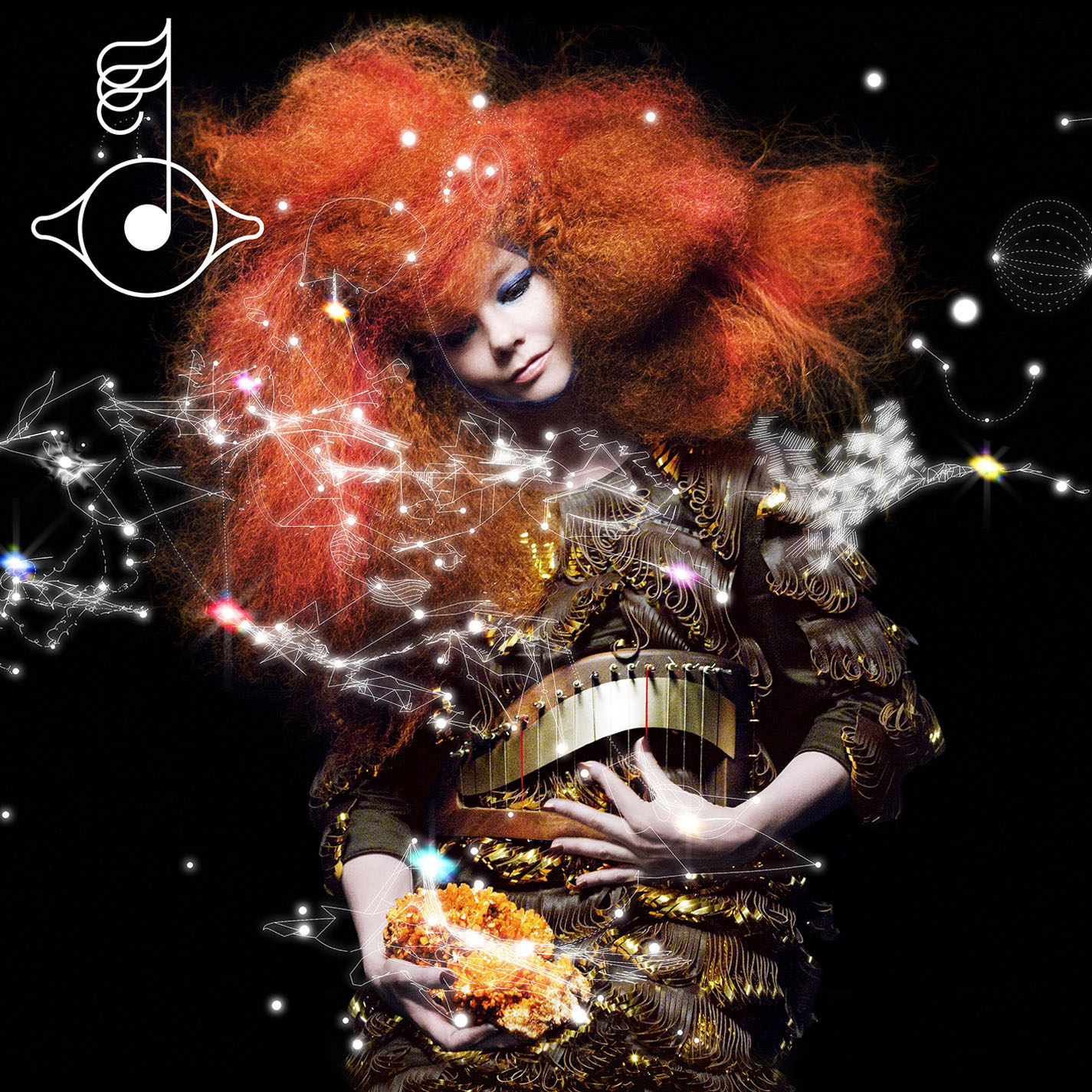
Björk's Biophilia Review

Biophilia
Artist: Björk
Released in 2011

Iceland needs your help. Their economy is in worse shape than ours and their most recent export was a volcanic plume that managed to piss off the entire volcano-less Western world. Sigur Rós, pioneers of music existing beyond the infinite, should have ended their hiatus and released another album of spacey extraterrestrial speak to get their country back on track. Jónsi and co. won’t budge. We thus turn to the most popular statesman in Icelandic history: Björk. The proprietor of the swan dress that your mother remembers from the Oscars  returns after four years off with a eclectic LP that consists of individual iPad apps for each song, and they are, according to her, expressions “of the music, the story and the idea.” The entire project is one potpourri of science, nature, technology, geology, love, bedlam and the bizarre from one crazy mind. Uh-oh. 

Well, I build up the insanity of the album yet forgo mentioning its much-deserved qualifier: it works. Björk is an agent of chaos as well as beauty. She deftly clashes the two to find that beauty shines within chaos and chaos boils underneath beauty. Her peculiar (a platitude of a word here) 90s hit, “Hyperballad," consisted of lucid, intimate lyrics of a girl dreaming of throwing all she owns - and even herself - off a cliff only to find solace in her lover’s arms upon waking up. Not a typical approach to love, but more than effective with her puling delivery and the internally resonating bassline. The instrumentation of her songs always contains curiosities, and especially so on Biophilia. Four harpists layer the gentle opener “Moon," and demented spurts of church organ haunt “Hollow."  She even customized a Tesla coil (the dramatic lightning generator David Bowie walks through in The Prestige) for additional sound effects in the aptly-titled “Thunderbolt."  Better yet, she  - or, more accurately, her poor roadies - is lugging that mad device around for her tour. 

No matter how many machines creak underneath, her voice still reigns as her supreme asset, a beautiful instrument unleashed with her polarizing manipulation. Björk has gotten flak for decades now from those who do not care for her pipes, and this album will not convert the disenchanted. At the very least, you must admire the craft she endows in every syllable or hushed utterance. She sings dynamically, moving up and down the register and dipping into perfect harmony or shocking dissonance as quickly as she pulls away. Peruse pictures of Iceland, and her take on vocals may even resemble the oscillating terrain of her homeland. She scales icy mountains like the wind only before plummeting off a plateau the next moment. Her venomous rebuke of a lover, rift with such winning geological images as “as fast as your fingernail grows/the Atlantic ridge drifts," “Mutual Core” harbors a contempt best emoted through her triumphant delivery of “you didn’t know I had it in me.”  That voice which sounds so grand also feels tender, vulnerable on other tracks as “Moon."  In a harsh landscape of cold, she is alone wishing to “once again be reborn.” She receives her wish, finding warmth in the multiple dubs of her own vocals she cushions around herself, declaring herself “all birthed and happy.” Bizarre yes, though beautiful in its abstract confessional style that doesn’t self pity but throws all on the table, daring the listener to digest it all.

Compounding such an idiosyncratic style is Björk’s curiosity with the cosmos, a theme in every track here. She whispers gibberish in the nonsensical “Dark Matter,” composed in free time to convey the struggle of codifying that elusive medium. “Cosmogony," the title of which refers to the study of how existence came to, well, exist, is a very Björk track, as she sings without much accompaniment. Some may not dig, but her connection between being, faith and music as the ultimate source of all makes for a heartfelt study. This all culminates to the standout track of Biophilia and front-runner for Song of the Year, lead single “Crystalline." Innocent xylophone strains prance underneath a vocal line that sounds like it is sung from a solitary confinement cell until reaching the limitless expanse of the universe, and returning back again for the microscopic fury of an atom splitting. The jaw-dropper of an ending packs its punch from the machine gun barrage of beats and out-of-sync moments of silence that are the fitting moments of calm before the firestorm. Show me a dubstep artist who matches this euphoria. 

I twiddled with the iPad app and played a surprisingly intuitive game built on the beats and vibe of “Crystalline." It is solid and even fun, like some psychedelic inverse of Tempest. As for advancing the theme of the album, I am not sure if that is apt, but the focus is already clear. Björk gazes at the stars and marvels at the unseen expanse of it all.  Not unlike this year’s Terrence Malick film The Tree of Life. She wonders aloud of the truths that evade us all, only through eccentric, occasionally kick-ass music. Iceland, your hero has returned! Good luck finding the answers to your worldly problems though.  We just want to stare into space.

Final Verdict:
4 Stars out of 5
This review was originally written for The Cornell Daily Sun and can be viewed at its original location via this link

Tuesday, October 4, 2011

Janelle Monáe Concert Review

Janelle Monáe
At Barton Hall, Cornell University
On Sunday, October 2, 2011

Sometimes it is not just the music, but the atmosphere that makes the night. With a closer stage than usual and a respectful crowd filling the ranks, Janelle Monáe tore down the usual barriers to become one with the audience at Sunday night’s intimate, energetic set. It was a comfortable antithesis to B.o.B’s crowded and sweaty concert at Homecoming, with a smaller crowd that knew exactly where they wanted to be. Prelims and the rush before fall break likely kept many holed up in their dorms. Their loss. Monáe, a soaring rocket of talent and class, ignited Barton Hall with an incendiary performance.

The neo-soul darling has played shows for nearly a decade, but with the success of her first album, The ArchAndroid, last year, she is finally giving it all for the crowds she deserves. As a result, Monáe navigates the stage with the grace of a veteran, yet absorbs the rapture of her audience with gratitude the jaded have long forgotten. Decked in a tight tuxedo shirt and exaggerated black necktie, the fashionista blended singing, dancing and performance art (the term used quite literally in this case) into a stylish conglomerate of experimental R&B and funky, retro throwback. It is fitting she covered two classics from her heroes, with Prince’s 80s hit “Take Me With U” and the Jackson 5’s immortal “I Want You Back.” The original singers’ voices already bordered on the effeminate, and Janelle captured the youthful yearning with her soaring lines and stunning range. Certainly no one in the crowd was expecting the pitch-perfect delivery of “All I want ... All I neeeeed!!” in the Jackson standard, but she met the challenge. 

Her command of voice is thoroughly impressive, as she juggles a myriad of styles without struggle. “Locked Inside” could be a lost Off the Wall cut, with bass slinking underneath bars that allow for plenty of vibrato improvisation. Really, you wonder where Quincy Jones was hiding on the production credits. The cut staccato of “Wondaland” stands in stark contrast, and she held the microphone close as she screeched and ridiculously instructed, “Take her back to Wondaland/ She thinks she left her underpants.” Trust me, she could stick any absurd phrase in this refrain and you would still end up singing it to yourself on the way home. “Dance or Die,” which opened the festivities, basically blends hip-hop, funk and afropop into a groovy chant that allowed for her to pace across the stage and survey the fans she will entertain for the night. 

Janelle’s two huge hits, “Cold War” and “Tightrope,” received enthusiastic hoots and hollers upon the initial measures alone. Following her sensational performance at the Grammys this year, “Cold War” has entered the playlists of millions due to the fact that it is ... well, awesome. “Tightrope” wears its influence on its sleeve, with that James Brown enunciation of “sceeene” and even numerous dance breaks as horns blast behind. You have to appreciate the stamina of this girl. No synchronized moves were defined; she fell into the groove. A dance-savvy individual could list all her techniques better than me, though the whole crowd witnessed gliding redolent of the late King of Pop. 

When interviewed by the Sun last week, Monáe pitched her show as “not just a concert” but a “full experience.” Behind this 25-year-old Vessel of Soul a huge backing band laid the foundation. Not only one enthusiastic guitar player but assorted percussion, strings, backup singers and a full horn section. The James Bond brass punches and sweeping violins in “Sincerely, Jane” added a layer of class to a track aspiring to be a 60s Burt Bacharach composition. She regularly interacted with her musicians in crime, conducting the band with her giant winglike cloak for appropriately epic endings. Cyclops shades, Victorian masks and black robes made for a bizarre costume rack, and don’t forget the black and white balloon orgy throughout “Tightrope.” Monáe even stopped to paint her “Insanity Painting” — to which she gifted to one lucky birthday girl after the show — which consisted of angry swipes of paint on an innocent canvas.

Artists of Janelle’s caliber are not always so spot-on live. I saw Cee-Lo at Lollapalooza this summer and it was terrible. He had the audience — easily numerated in the hundreds of thousands — in his hand, yet lost them through awkward, extended banter and distant stage presence. It was a dreadful performance. Yet when Janelle silently asked for a hand wave, back and forth, with a heart cusped at the hands, the audience hypnotically obliged. It was natural, not forced, and more than deserved. In the final song of the encore, “Come Alive,” she engaged all of Barton Hall in repeat-after-me scatting before literally having them all descend to the floor. And when she broke the spell by screaming “I came alive!” before flipping over a mic stand, we, just for a moment, shared that collective rush as one.


This review was originally written  for The Cornell Daily Sun and can be viewed at its original location at the this link. The header picture above was taken by Tina Chou, Staff Photographer for the The Sun.