Tuesday, October 18, 2011

The Thing Review


The Thing
Directed by Matthijs van Heijningen Jr.
Released in 2011


Hollywood’s current state can be summed up with the 2011 version of The Thing:  it is a remake, of a remake, of a film, based on a novella, about a replicating ... thing. The recycling program in the movie industry that prefers to shun inspiration for silver screen adaptations of such winning comic books as Jonah Hex has made a remake of a remake, folks. Technically, it is a prequel. Reused scenarios and exact shot compositions speak otherwise. Director Matthijs van Heijningen Jr.’s (this recent flood of Northern European directors tests even the eloquent) modern take on the horror staple borrows so liberally from John Carpenter’s 1982 classic that there are bound to be moments of near-greatness. Not only is the genesis of these segments lifted, however, but the entire film lacks the sparse, humanistic touch that made the original remake (did I just say that?) the gritty masterpiece it is to this day. 

The source material, traced via carbon dating to John W. Campbell Jr.’s 1938 novella Who Goes There?, remains one of the strongest in the horror canon.  Part of its continued appeal lies in its setting, at an isolated scientific base located in Antarctica. Chances are you or I will never set foot anywhere near the ice continent, so a film focusing on a group of scientists holed up in a base there provides an odd source of exoticism. The inclusion of a highly advanced alien lifeform only compounds such interest. Frozen in a million-year-old block of ice, this thing is uncovered from its gigantic spaceship and brought back to the base, where it obviously wakes up from its long sleep to wreak havoc (if Terminator 2 taught us anything, it is that cold = stubbornly alive and hot = dead as dead). By that measure, the humans wield flamethrowers to torch the beast, or, more accurately, the many disposable humans it infects. 

A bloody witch hunt ensues, with the monster revealing its tentacled, shrieking self reliably for maximum gore and minimum wonder. Carpenter’s film utilized models, puppets, and animatronics that shocked and nauseated because they were undoubtedly on the same plane, there on the same soundstage. The CGI sheen of this film robs much of the realism for more elaborate, and in turn less believable, Thing-flailing, impaling, and face-morphing effects. There is a sequence where flamethrowers roast a series of Things that cascade from one person to the next. Such liberal violence, and on-screen depictions of it, desensitizes the audience to a point where it simply becomes an action movie. 

An action movie loaded with cheap scares, that is. Van Heijningen exploits the jump scare to its last cliched leap. You likely will be able to predetermine the exact moment the bogeyman appears through the submergence of ambient sound and the familiar cadence that follows. The terror of the film exists moment by moment and does not pervade, live in the atmosphere. No dread constricts the narrow, monotonous hallways;  the psychological trickery Carpenter played by never assuring anyone as safe is absent. The windy Antarctic wasteland surrounding them does not look cold enough. And the journey into the flying saucer comes across as just unnecessary. The design of the ship’s interior combines Cowboys & Aliens’ generic hallways, video game Prey’s organic, fleshy walls and an inexplicable fountain of pixels into one anachronistic, needless sin of feng shui. 

Van Heijningen (the director if you’re losing track) can be blamed for the superficial scares, but screenwriter Eric Heisserer (A Nightmare on Elm Street, Final Destination 5 ... this is making sense now) attempts to mend the gap by emulating the 80s version to a fault. Scenes that copy from its inspiration build suspense effectively for they have done so before. When Kate (Mary Elizabeth Winstead) organizes a test to determine who’s human and impostor, anxiety indeed grows. There is something much less badass, however, with shining a flashlight into someone’s teeth to check for fillings (the alien cannot replicate inorganic matter, blah blah blah) than jabbing a flaming rod into a dish of each person’s blood only for the infected one to literally scream when touched. Last time I checked, dental checks do not belong in any horror film not called Marathon Man

R.J. MacReady is a name any horror buff will recall. Kurt Russell’s legendary beard in the 1982 version may be responsible, but the film built a strong protagonist who thwarted the menace with ability and genuine frustration. The characters this time around lack any distinguishing qualities. In fact, I do not even recall their names. Lost’s Mr. Eko - that is what I called him - played by Adewale Akinnuoye-Agbaje is tragically underused. The script feeds Eric Christian Olsen’s character such needed lines as, “It’s inside,” after an exterior window breaks off-screen. Mary Elizabeth Winstead from Scott Pilgrim exceeds the laughable standards now set for females in horror films, but she is no Ripley either. Eric Heisserer’s jumpy script can be held accountable, which raises the question as to why a better writer was not chosen.

I step back and ponder why they made this Thing. John Carpenter updated Howard Hawk’s 50s Marxist allegory for modern audiences 30 years ago. What else needed to be said? It does not offer a modern take on the worn story aside from updated computer effects. I enjoyed some of it, yes, particularly the end credits sequence that, rather heavy-handedly, tied this prequel’s story to Carpenter’s universe. It roused the few Thing fans there were in the audience. Universal is learning the tough way that this franchise is not a money earner. That both the 1982 and new films share in common. The former was released just two weeks after E.T., and no one wanted to see an alien that they thought loved Reeses Pieces feast on human flesh. Which reminds me: E.T. ... we’re due for an update on that cash cow by now aren’t we?

Final Verdict: 
2 Stars out of 5


This review was originally written for The Cornell Daily Sun and can be viewed at its original location via this link.

Tuesday, October 11, 2011

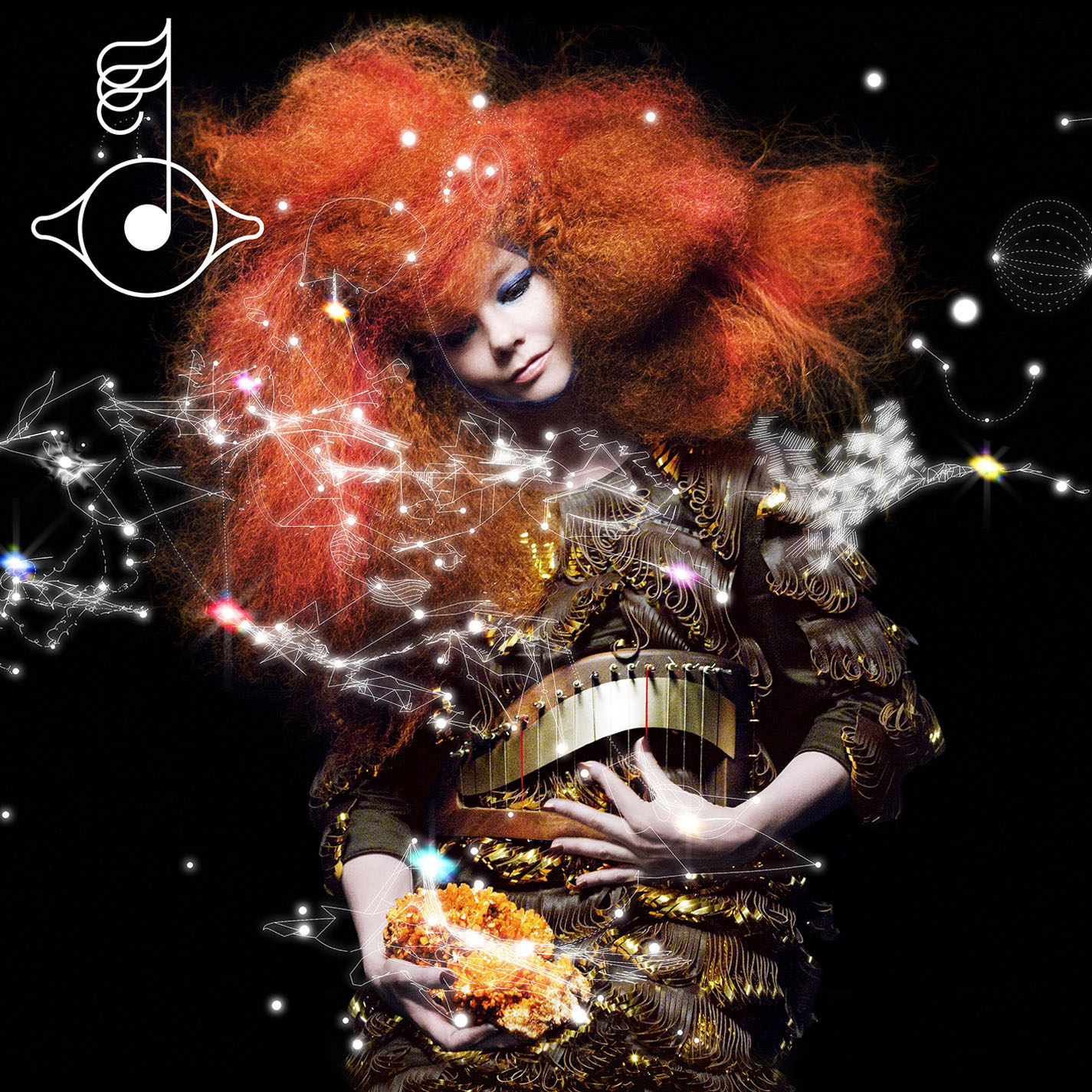
Björk's Biophilia Review

Biophilia
Artist: Björk
Released in 2011

Iceland needs your help. Their economy is in worse shape than ours and their most recent export was a volcanic plume that managed to piss off the entire volcano-less Western world. Sigur Rós, pioneers of music existing beyond the infinite, should have ended their hiatus and released another album of spacey extraterrestrial speak to get their country back on track. Jónsi and co. won’t budge. We thus turn to the most popular statesman in Icelandic history: Björk. The proprietor of the swan dress that your mother remembers from the Oscars  returns after four years off with a eclectic LP that consists of individual iPad apps for each song, and they are, according to her, expressions “of the music, the story and the idea.” The entire project is one potpourri of science, nature, technology, geology, love, bedlam and the bizarre from one crazy mind. Uh-oh. 

Well, I build up the insanity of the album yet forgo mentioning its much-deserved qualifier: it works. Björk is an agent of chaos as well as beauty. She deftly clashes the two to find that beauty shines within chaos and chaos boils underneath beauty. Her peculiar (a platitude of a word here) 90s hit, “Hyperballad," consisted of lucid, intimate lyrics of a girl dreaming of throwing all she owns - and even herself - off a cliff only to find solace in her lover’s arms upon waking up. Not a typical approach to love, but more than effective with her puling delivery and the internally resonating bassline. The instrumentation of her songs always contains curiosities, and especially so on Biophilia. Four harpists layer the gentle opener “Moon," and demented spurts of church organ haunt “Hollow."  She even customized a Tesla coil (the dramatic lightning generator David Bowie walks through in The Prestige) for additional sound effects in the aptly-titled “Thunderbolt."  Better yet, she  - or, more accurately, her poor roadies - is lugging that mad device around for her tour. 

No matter how many machines creak underneath, her voice still reigns as her supreme asset, a beautiful instrument unleashed with her polarizing manipulation. Björk has gotten flak for decades now from those who do not care for her pipes, and this album will not convert the disenchanted. At the very least, you must admire the craft she endows in every syllable or hushed utterance. She sings dynamically, moving up and down the register and dipping into perfect harmony or shocking dissonance as quickly as she pulls away. Peruse pictures of Iceland, and her take on vocals may even resemble the oscillating terrain of her homeland. She scales icy mountains like the wind only before plummeting off a plateau the next moment. Her venomous rebuke of a lover, rift with such winning geological images as “as fast as your fingernail grows/the Atlantic ridge drifts," “Mutual Core” harbors a contempt best emoted through her triumphant delivery of “you didn’t know I had it in me.”  That voice which sounds so grand also feels tender, vulnerable on other tracks as “Moon."  In a harsh landscape of cold, she is alone wishing to “once again be reborn.” She receives her wish, finding warmth in the multiple dubs of her own vocals she cushions around herself, declaring herself “all birthed and happy.” Bizarre yes, though beautiful in its abstract confessional style that doesn’t self pity but throws all on the table, daring the listener to digest it all.

Compounding such an idiosyncratic style is Björk’s curiosity with the cosmos, a theme in every track here. She whispers gibberish in the nonsensical “Dark Matter,” composed in free time to convey the struggle of codifying that elusive medium. “Cosmogony," the title of which refers to the study of how existence came to, well, exist, is a very Björk track, as she sings without much accompaniment. Some may not dig, but her connection between being, faith and music as the ultimate source of all makes for a heartfelt study. This all culminates to the standout track of Biophilia and front-runner for Song of the Year, lead single “Crystalline." Innocent xylophone strains prance underneath a vocal line that sounds like it is sung from a solitary confinement cell until reaching the limitless expanse of the universe, and returning back again for the microscopic fury of an atom splitting. The jaw-dropper of an ending packs its punch from the machine gun barrage of beats and out-of-sync moments of silence that are the fitting moments of calm before the firestorm. Show me a dubstep artist who matches this euphoria. 

I twiddled with the iPad app and played a surprisingly intuitive game built on the beats and vibe of “Crystalline." It is solid and even fun, like some psychedelic inverse of Tempest. As for advancing the theme of the album, I am not sure if that is apt, but the focus is already clear. Björk gazes at the stars and marvels at the unseen expanse of it all.  Not unlike this year’s Terrence Malick film The Tree of Life. She wonders aloud of the truths that evade us all, only through eccentric, occasionally kick-ass music. Iceland, your hero has returned! Good luck finding the answers to your worldly problems though.  We just want to stare into space.

Final Verdict:
4 Stars out of 5

This review was originally written for The Cornell Daily Sun and can be viewed at its original location via this link

Tuesday, October 4, 2011

Janelle Monáe Concert Review

Janelle Monáe
At Barton Hall, Cornell University
On Sunday, October 2, 2011

Sometimes it is not just the music, but the atmosphere that makes the night. With a closer stage than usual and a respectful crowd filling the ranks, Janelle Monáe tore down the usual barriers to become one with the audience at Sunday night’s intimate, energetic set. It was a comfortable antithesis to B.o.B’s crowded and sweaty concert at Homecoming, with a smaller crowd that knew exactly where they wanted to be. Prelims and the rush before fall break likely kept many holed up in their dorms. Their loss. Monáe, a soaring rocket of talent and class, ignited Barton Hall with an incendiary performance.

The neo-soul darling has played shows for nearly a decade, but with the success of her first album, The ArchAndroid, last year, she is finally giving it all for the crowds she deserves. As a result, Monáe navigates the stage with the grace of a veteran, yet absorbs the rapture of her audience with gratitude the jaded have long forgotten. Decked in a tight tuxedo shirt and exaggerated black necktie, the fashionista blended singing, dancing and performance art (the term used quite literally in this case) into a stylish conglomerate of experimental R&B and funky, retro throwback. It is fitting she covered two classics from her heroes, with Prince’s 80s hit “Take Me With U” and the Jackson 5’s immortal “I Want You Back.” The original singers’ voices already bordered on the effeminate, and Janelle captured the youthful yearning with her soaring lines and stunning range. Certainly no one in the crowd was expecting the pitch-perfect delivery of “All I want ... All I neeeeed!!” in the Jackson standard, but she met the challenge. 

Her command of voice is thoroughly impressive, as she juggles a myriad of styles without struggle. “Locked Inside” could be a lost Off the Wall cut, with bass slinking underneath bars that allow for plenty of vibrato improvisation. Really, you wonder where Quincy Jones was hiding on the production credits. The cut staccato of “Wondaland” stands in stark contrast, and she held the microphone close as she screeched and ridiculously instructed, “Take her back to Wondaland/ She thinks she left her underpants.” Trust me, she could stick any absurd phrase in this refrain and you would still end up singing it to yourself on the way home. “Dance or Die,” which opened the festivities, basically blends hip-hop, funk and afropop into a groovy chant that allowed for her to pace across the stage and survey the fans she will entertain for the night. 

Janelle’s two huge hits, “Cold War” and “Tightrope,” received enthusiastic hoots and hollers upon the initial measures alone. Following her sensational performance at the Grammys this year, “Cold War” has entered the playlists of millions due to the fact that it is ... well, awesome. “Tightrope” wears its influence on its sleeve, with that James Brown enunciation of “sceeene” and even numerous dance breaks as horns blast behind. You have to appreciate the stamina of this girl. No synchronized moves were defined; she fell into the groove. A dance-savvy individual could list all her techniques better than me, though the whole crowd witnessed gliding redolent of the late King of Pop. 

When interviewed by the Sun last week, Monáe pitched her show as “not just a concert” but a “full experience.” Behind this 25-year-old Vessel of Soul a huge backing band laid the foundation. Not only one enthusiastic guitar player but assorted percussion, strings, backup singers and a full horn section. The James Bond brass punches and sweeping violins in “Sincerely, Jane” added a layer of class to a track aspiring to be a 60s Burt Bacharach composition. She regularly interacted with her musicians in crime, conducting the band with her giant winglike cloak for appropriately epic endings. Cyclops shades, Victorian masks and black robes made for a bizarre costume rack, and don’t forget the black and white balloon orgy throughout “Tightrope.” Monáe even stopped to paint her “Insanity Painting” — to which she gifted to one lucky birthday girl after the show — which consisted of angry swipes of paint on an innocent canvas.

Artists of Janelle’s caliber are not always so spot-on live. I saw Cee-Lo at Lollapalooza this summer and it was terrible. He had the audience — easily numerated in the hundreds of thousands — in his hand, yet lost them through awkward, extended banter and distant stage presence. It was a dreadful performance. Yet when Janelle silently asked for a hand wave, back and forth, with a heart cusped at the hands, the audience hypnotically obliged. It was natural, not forced, and more than deserved. In the final song of the encore, “Come Alive,” she engaged all of Barton Hall in repeat-after-me scatting before literally having them all descend to the floor. And when she broke the spell by screaming “I came alive!” before flipping over a mic stand, we, just for a moment, shared that collective rush as one.


This review was originally written  for The Cornell Daily Sun and can be viewed at its original location at the this link. The header picture above was taken by Tina Chou, Staff Photographer for the The Sun.

Friday, September 30, 2011

The Machine Who Knew Too Much

The following is a paper I wrote for my films class. Not exactly a great pitch to entice the reader, but I formed the argument in a way only lightly abiding to scholastic format and tried to have fun with the structure. This paper is a scene breakdown of the classic 2001: A Space Odyssey, directed by Stanley Kubrick. The scene in question is when astronauts Bowman and Poole meet in the pod to discuss the problem of HAL, the suspicious supercomputer. Naturally, there are spoilers to the film inherent to the discussion. 

The Machine Who Knew Too Much:
Misplaced Power and Humanity in Kubrick's 2001


It is not so much a question anymore whether or not you have an iPod, but how much music it holds, whether it is also a phone, and what bird-soaring games are installed on it. We are sucked into screens when other human beings surround us; pixels and electric currents are just about preferred lanes of communication as any. The more advanced technology becomes - by our own innovations no less - and the increasing degree to which we rely on it sets up irrevocable dangers. Cinema loves to scare us with such apocalyptic scenarios, ranging from nationwide network blackouts in Live Free or Die Hard to a full-on robot revolution in The Terminator series. However, film’s most memorable depiction of technology’s influence and mastery might belong to a soft, comforting voice you would welcome into your home. The supercomputer HAL from Stanley Kubrick’s 1968 opus 2001: A Space Odyssey presents itself as trustworthy and dependable, with near empathy for human feeling. The powers behind the camera form this initial image, only to progressively shift the audience’s perception through faint hints and both the revealing and withholding of certain information. The memorable scene in which we finally discover HAL’s true power and motives features not a single word spoken by it, but light, enlightening cues Kubrick feeds us as the human astronauts attempt to escape HAL’s grasp. Kubrick underlines technology’s omnipresence and mutinous superiority over man through subtle directorial tactics as camera distance, the inclusion of HAL in nearly all shots and voyeuristic camera movement. 

The lens of the camera are effectively the eyes of the audience, and Kubrick gauges the distance between subject and viewer to emphasize man’s inferiority. The previous scene ends and transitions to the next with an extreme closeup on HAL and its cascading, unwavering red-orange eye. Astronauts Bowman and Poole sit up from their chairs to move to their presumed safe location and their action reflects across the screen-filling eye of HAL. The computer knows something is awry, and will see to the problem, most literally. After the pair enter the pod bay and ask HAL to rotate the pod, Bowman requests for the door to open. This shot is framed awkwardly, from a low angle and at quite a distance. Their heads only reach halfway up the screen, with the vacant top filled with the artificial light emanating from every ceiling of the spacecraft. Low angle shots can often entrust power upon the subject, yet the opposite is achieved in this case. The off-focus rotating pod to the right and the reliably white apparatus to the left barricade the humans between, and the full exposure of the immaculate ceiling above them surround man with science. Bowman and Poole are the test objects to HAL watching behind them, and they appear insignificant in the face of such omniscient circuitry. That wary gaze they exchange briefly uncovers true fear and mistrust, a revealing action they believe goes unnoticed. The camera in almost every sense acts as an extension of HAL’s purview even where a physical extension lacks. HAL’s mastery of interpreting body language and maintaining aural control compensates when vision may lack. The machine sees this exchange precisely how the audience sees it:  full of doubt and scheme. The subsequent shot reaffirms the suspicion through framing and placement alone. A 180 degree reverse shot covers the previously unseen perspective. The angle is high, looking down on the backs of Bowman and Poole as they enter the pod. Their two helmets evenly surround them, this time squeezing two human subjects between the technological representations of themselves. The distance is far, with the helmets dwarfing the humans; both space helmets will act as part of the gambits HAL later acts upon to kill each human. HAL will succeed with one, poor Poole, as the computer seeks to cut the ties with the technology that man has become so dependent on (it is also fitting it kills the rest of the crew by simply deactivating their complex life system). Therefore, Kubrick inserts clever foreshadowing in this shot in addition to the visual representation of man’s growing insignificance to his own creations surrounding him. 

The inclusion of HAL in almost all shots accents its ubiquity and wit.  The aforementioned extreme closeup recurs often and editing splices it into sequences for the viewer to wordlessly comprehend HAL’s active cognition. After the helmet shot, Kubrick and editor Ray Lovejoy insert that intimate image to disclose HAL’s quiet attentiveness to the unfolding events. The most memorable shot of the scene quarters Bowman and Poole in the small confines of the pod as they face each other akin to men sitting across one another at a dinner table. Between them, however, about on center of the clear aperture of the pod, HAL watches. The two express their doubts on the robot, and conclude they may have to shut it down for its unprecedented miscalculation. Bowman (slowly and methodically) switched off communication channels with HAL before they started their conversation - at the same pace in which Bowman engages the final switches later - so they believe their conversation remains confidential. Yet HAL still watches. This entire shot appears uninterrupted until editing interpolates a lone image of HAL, as viewed from inside the pod, through the window, staring back. If the audience did not believe HAL was playing an active role in the scene, little doubt now rests. Cut back to the same shot of them talking, as they get to the meat of their discourse in their doubts of the computer’s performance. Now editing thrusts us right into the eyes of the beholder once more, through the same extreme closeup used before, yet this time with much more consequence; its knowledge spells doom. Such wise editing and placement of HAL within shots stresses technology’s omnipresence around man.

The optical grace of Kubrick’s camera movement establishes connection between the machine’s perspective and the viewer, and in the process humanizes the robots. The first shot of the pod bay contains one of the two instances of dynamic camera placement in this scene. In both cases, the lens of the camera acts as well as the lens of an eye. The first instance starts on a long shot of Bowman and Poole descending a ladder with HAL to the far left, stationed on the wall maintaining watch. As the two enter the bay, the camera swerves as to be in line with HAL’s field of vision, which in case views the wide window in the pod bay. The camera then gently nudges forward until the edges of the window disappear from view. This subtle trick lets the viewer see through the eyes of HAL without perhaps realizing it, granting a voyeuristic view of the two astronauts, even zooming in on them, as they are aiming to flee from the computer’s jurisdiction for just one moment. The only other shot with an active camera holds the true twist in the film. The directing and editing have built up the suspense, hinting at HAL’s dishonest machinations. The final reveal unfolds without any sound, through the “eyes” of HAL, as this point of view shot is also an extreme closeup on both Bowman and Poole’s lips. Without the dialogue we hear before, we are thrown into HAL’s seemingly deaf perspective. Yet it is that aim on the lips that shows us the computer can translate lipreading to flawless effect. HAL knows. This shot not only reveals its true nature, but also grants it humanlike qualities. The absence of any overlaying, digital interface to survey the landscape present this robot as a rather simplistic one. Once it starts to flick back and forth between talking lips, however, we realize this could be a human’s point of view we are witnessing, with the visual appearance and mobile fluidity of a human eye. The scheming HAL is more like us than we would care to think:  dishonest, and also curious, seeking answers to questions those it trusts will not tell it. Perhaps HAL is simply emotionally hurt to learn that its only “friends” are planning on killing it. A bombshell of that magnitude would tear you apart, too. Kubrick’s spare and soulful use of moving camera shots wordlessly conveys empathy with HAL and thus edifies the supercomputer. 

Through camera distance, movement and focus on HAL, Kubrick cautions of technology’s omnipresence, and, in turn, grants humanlike qualities to the machines themselves. The works of man reach a point where they can evolve past their fundamental constraints, not unlike God’s own creations. A film may show us a montage of years and years of technological development and incorporation to stress this point, or an indulgent display of pyrotechnics to showcase the machines’ real strength. Yet, when a film grants machine the most human of qualities as curiosity, wordlessly displaying its range of feeling and thirst for knowledge, it, or shall I say he, is one of us. 

Saturday, September 24, 2011

Drive Review

Drive
Directed by Nicolas Winding Refn
Released in 2011

Quentin Tarantino did not reach his unique plane of influence or popularity from his looks or people skills (his best interviews evolve into glorious exercises in sibilation and gesticulation). No, he just knows how to wield a camera well, and how to implement bold post-production techniques to realize his crazy vision. It's all about style, baby. Hailing from Denmark is a man who lives these truths. Nicolas Winding Refn directs Drive with an eery amount of confidence and talent to back up the chutzpah. Sure, Ryan Gosling may be behind the literal wheel in the story but it is Refn doing the steering. 

With all that said, Drive is a different beast. Such a title conjures up images of Vin Diesel and Paul Walker piloting sports cars in kinetic chase sequences over a story geared for  sequential exploitation. Nothing of the sort here. Sure, the few driving scenes are superb, but they aim for suspense rather than stimulation, achieved through that age-old adage "less is more." The film takes its time. Editor Matthew Newman scales back transitions more than you would expect, to the point of discomfort. The first thirty-odd minutes move with little energy or seeming motive, but it effectively establishes a mood, almost hypnotic, that cushions the viewer into false security. At the point when all gates come crashing down, the film still moves with lethargy, but a new flame burns in its eyes. To quote Leo DiCaprio from The Departed, "Your heart rate is jacked. And your hand, steady."

Plot summary for the sake of plot summary will not acquaint you with the workings of the film. Just know there is a man with no name, blessed with divine driving skills and thus known to us as Driver, played by a nearly mute Ryan Gosling, and he gets himself into trouble. He wants to protect a married woman (Carey Mulligan), and their love grows from lengthy stares into each others' eyes. There are angry folks, such as gangsters played by Ron Perlman and Albert Brooks, the latter whose temper rivals Joe Pesci's on poker night. There are nice guys, like Bryan Cranston, but I've never seen the Breaking Bad actor so feeble since he had Jane Kaczmarek for a TV wife. These auxiliary characters serve roles of plot stimulus and, in the end, not much more. Of course, there are moments of acting brilliance - Brooks has never been this delightfully menacing, and Gosling conveys bliss to fury with nothing more than his expressions - but the characters are not the devices that carry this film. 

Everyone behind the camera contributes to the aura - perhaps the word is "mystique"? - this film congeals. Cinematographer Newton Sigel works wonders with lighting in the elevator scene that, from Hossein Amini's script, progresses so atypically it may put the audience into shock. The costumes, designed by Erin Benach, are attractive as well as appropriately symbolic. That scorpion design on the back of Driver's jacket speaks volumes when the character does not. Sound design crafts ultimate suspense as Driver sits in his car, waiting, as a constant ticking noise steadily ties your stomach in knots. Cliff Martinez's score lends a spacey ambience to the drama, and Refn's choice of obscure 80's synth and disco cuts underline the retro style that is certainly the influence. Pink, gaudy font for the opening credits may remind gamers of Grand Theft Auto: Vice City, as will the police-evading car chases. 

Much like the GTA series, this film is violent. Shockingly brutal, even. Gunshots, stabs and especially stomps enact devastating carnage upon those in contact. The minds behind the camera wisely cut away from the most gruesome sights quickly to let the viewer fill in the rest of the image. It may be a more unsettling technique than letting us stare. The violence, in its context and intensity, escalates this from a standard crime film to a strangely calm, mesmerizing B-movie. The term is not to undermine the film; it is not unlike Korean classic Oldboy and its use of slick technique and brutal violence to hold up a pulp premise. (Also, both protagonists wreck hell with a hammer). However, it is lacking a quality to rank it with the greats. The greatest films that contain gratuitous violence also talk about it, ask the unheard question: why? Why must it be this way, to this degree? Pulp Fiction, Fargo, even the recent In Bruges all tackle this question. None have an answer. But its that ability to propose those inquiries, adding intellectual weight under the hood, that place them in that higher pantheon. 

It's action, revenge, romance, thriller, drama yet none of those genres. It is simply Drive. Gosling excels in expressionist acting (the anger he communicates with his clenched fist in the strip club scene is shocking), but Refn grants this film its greatest gifts. Style, when slick and innovative, can hypnotize and reel in the audience.  As a result, due reason or philosophical depth may lack. But when a scene formed so well, wholly - such as when Driver confronts Nico (Perlman) in the dead of the night, with a Riz Orlotani opera piece solely accompanying, lighting faint, shots haunting yet oddly calming - that you reach a level of ineffable emotional transcendence ... well, I guess not much else matters.

Final Verdict: 
4 Stars Out of 5


This article is from The Cornell Daily Sun and is published here from the text of this original article

Wednesday, August 17, 2011

Rise of the Planet of the Apes Review

Rise of the Planet of the Apes
Directed by Rupert Wyatt
Released in 2011

A little over a month ago I visited the Bronx Zoo with my family for the first time in almost eight years. It was a tradition to see the toucans, sea lions and exotic mice as a child, so the visit was a little childhood send-off. As exciting it was to see the Egyptian Spiny Mouse once more, I was taken back during the visit to the outdoor primate exhibit. One gorilla sat upright, against a stump, seemingly indifferent to the visitors and conditioned to their presence. He gazed not at children beating on the glass, nor even his own kind, but upwards. He could have been daydreaming in the clouds above. I do not think a fish knows it is a fish, cognizant of its own existence. But I am confident (as are scientists as a quick Google search will show) that a gorilla, and all great apes for that matter, are capable of existential reflection, aware of their own existence. They boast qualities of humanity, a trait, surprisingly enough, almost exclusively reserved for humans. They are also capable of extreme brutality, as that horrifying story of the woman whose face was literally ripped off from a supposedly tame chimpanzee will attest. With strength that overshadows our own and a sense of purpose, monkeys kept in captivity makes for a risky game. With modifications to intelligence that allow comprehension of the injustice they have been served, we face a significant threat. Such thought provides conflict for Rise of the Planet of the Apes.

Why studio executives decided to reboot a franchise that had no winners since its inception in 1968 - and the abysmal Tim Burton/Mark Wahlberg remake still leaving a bad aftertaste - is beyond me. But that they did so with unsuspecting feeling and humanity leaves me surprised. That the filmmakers utilized computer effects as the primary vehicle to engage the audience emotionally shocks me even more. There are pleasant surprises to behold as Rise enfolds; they taper off by the end but this blockbuster still boasts a higher IQ than the norm, like our protagonist Caesar. James Franco's name has been attached to this title but even the release poster only displays Caesar, the chimp created by computers and a very dedicated Andy Serkis. Make no mistake:  this primate of pixels is the star of the show, and an incredibly convincing one at that. 

An alternate version of a prequel to the Planet of the Apes saga, the story explains, well, the rise of the apes over the humans who have controlled them for so long. A chimp with superior intellect - inherited from his mother who was applied an allegedly Alzheimer's-curing drug before turning rabid - becomes the harbinger of this revolution. But under the care of soft scientist Will Rodman (Franco), Caesar is as sensitive as a child and similarly seeking answers. He defies the classification of "pet" but still cannot meet the next true level. Frustration boils underneath his tender exterior, a genius wanting bigger and bolder things. But he genuinely cares for his family, and devotes much time to comfort Will's ailing father (John Lithgow), whose severe onset of Alzheimer's may be a more powerful motive for Will's tireless research. Caesar is one with the family until an extreme circumstance forces him out of the house (the brunt of which the incredibly unlucky neighbor receives). As he lives in a zoo he begins to communicate with other apes, notably a very wise orangutan, and exercises his intellect over the rest. The "prison" scenes, if you will, are akin to Shawshank Redemption in a sense:  abused at first, a man uses wit to win over the heavies and wields intimidation and persuasion to unite those who wish to rever him. We have seen it before, but not like this. 

Unfortunately, the story loses steam as the fight turns physical, escalating to a brawl on the Golden Gate Bridge. What once was a fresh meditation on the nature of humanity turns to Roland Emmerich fodder. It stops asking those moral, existential questions, and the script seems to side with the apes when there is still so much grey area. When human law prevents a father and son (Will and Caesar, respectively) from being together, is it right for the son to take out so much anger on the father? Is this catalyst a fitting reason to believe your cause for species dominance is just? It is a small, personal reason, and these struggles appear so miniscule in the larger picture, yet so overwhelming to the individual. As an audience, we both sympathize and empathize, as we know how that feels, so it may be a wise choice.  But, in the larger picture, the apes' cause is portrayed as the absolute right one - for dramatic effect - when the sensible approach would be more objective. 


This is a story of man - or in this case a monkey - and his loss of innocence. In this case, his genius intelligence amplifies this already significant revelation, for while he mopes after realizing his species' true stratum against humans, he takes action.  It is sad to see Caesar make such a choice, for most of the film Will nurtures Caesar out of selflessness, though Franco's occasionally stiff acting not always communicates this. Nonetheless, we care about their bond, and it is this relationship that occupies the majority of the film's runtime. This is great, because the mandatory though unoriginal action scenes are as short as they can be. And this is not say those scenes are bad, for chimps and orangutans playing a life-or-death game of monkey bar under the Golden Gate Bridge makes for great entertainment. But it does not tread the abstract pavement much of the film so boldly dares to walk. 


The equally risky decision to make the protagonist a digitally rendered monkey that is not an anthropomorphic cartoon reaps unforeseen rewards. Here is a full-bodied, expressive, fluidly-drawn character that we believe. Avatar laid admirable groundwork in the field of advanced computer, erm, avatars. However, Caesar carries more emotional nuances and without saying a word (!!). Bliss, melancholy, mirth, anger, love, and envy all pour from this marvel of computer and acting wizardry. Andy Serkis is the greatest proponent of this technique, and while fellow chimp Kong and cinema icon Gollum, especially, were fascinating works of his, Caesar represents even more advanced leaps in technology and a deeper, dominating role.  If no other aspect of this film appeals to you (which I can understand given this series' track record), see it for Serkis' performance alone.


Other actors fascinated, in varying ways. John Lithgow steps into the shoes of an Alzheimer's victim, one slowly fading away and aware of his tragic descent. The eyes, he nails the eyes, for they wander and wander until they affix on your own, and there is the sinking feeling that they do not recall the history both pairs have shared. My grandfather spent the last years of his life afflicted with the terrible disease, the leech that sucked away even the most powerful memories of love. For the record, five added years of not just life, but full neurological function and ability to recall all moments with loved ones and still be able to create more is not a failure, as Will states of the drug trial of his father. It is an incredibly immature conclusion to make, and another example of the film's frequent moments of jumping to resolutions far too eagerly and decisively. There is much grey area in the real world that this screenplay does not seem to acknowledge.


On a lighter note, the other casting choice worthy of note is Tom Felton, playing Draco Mal-uh Dodge Landon, the abusive monkey handler. There is little difference from this role to Draco Malfoy, which suits a Potter fan like myself just fine, and I swear he delivers that trademark Draco sneer at least once. After all, "monkey" and "Mudblood" sound awfully similar. This Dodge Landon kid seems to have every job at this facility:  he feeds, locks up, tases, and shoots darts at the apes, and even guards at the outdoor post. He is the son of the owner (spoiled, privileged son? Tom Felton??? No!) but you'd think he would not handle every aspect there. But I digress. It is great to see Felton, even if his role is not original in really any way. One of the cheapest shots in the screenplay but also most downright fun is the regurgitation of Charlton Heston's immortal line from the original film. It is there, all glorious nine words. And Felton delivers it well, as badass as he could, I think. Where this man's career will go I do not know, but if he is destined to play pseudo-Draco roles for the rest of his young adult life, I will be there to observe. Until the novelty wears off at least. 


Anyway, back on track, Rise of the Planet of the Apes is a blockbuster film really unlike that I have seen before. The special effects are as crucial to the storyline and theme as they could be, and even when director Rupert Wyatt and the FX team wants to have fun, as in that mesmerizing tracking shot of young Caesar navigating through the house, it does not feel thrown in, but purposeful. Serkis' portrayal of the chimp fuses primality and vulnerability in a character more alive than any other actor on the screen. The distinct flaws fidgeting under the surface are there, though do not detract as much as annoy. I did not even touch upon the vestigial Freida Pinto character who serves little purpose. But the film seems to get away with these defects for, with all the grade-A computer alchemy, it is a B movie, albeit one of the few in existence with such philosophical ideas as the cognizance of animals and the just treatment of sentient beings. The sometimes brilliant, sometimes banal direction, irregular pacing, and predictable but alluring screenplay all point to mindless fare. But that it is so much more than that is where this film's pleasures unfold. It asks us to consider our place in the world among those we coexist with, sometimes too briskly, but that it treads this ground at all far surpasses the expectations it set for itself. A viewing of Rise will garner entertainment, thought, and maybe even some apprehension at the ape exhibit next time at the zoo. 


Final Verdict: 
3.5 Stars Out of 5

Wednesday, August 10, 2011

Cowboys & Aliens Review

Cowboys & Aliens
Directed by Jon Favreau
Released in 2011

A movie's title should communicate not only the concept of the film but some of the tone as well. We should determine whether or not it is a comedy, drama, action film, etc just from the name. Eternal Sunshine of the Spotless Mind is a crazy title; fitting then, huh? Snakes on a Plane, on the other hand, sounds so self aware that it must be drenched in irony and camp. Cowboys & Aliens carries so little conviction that it should follow the same path. However, the filmmakers attempt to fuse two genres, western and alien invasion, and fail to fulfill either's potential or even basic principles. 

The first shot consists of a sprawling desert landscape, panning right until our hero Jake Lonergan (Daniel Craig) bolts upright into the shot, gasping and searching around for his bearings. He has no memory of who he is or why he is so vulnerable. A promising start. From there the driving Morricone-esque score by Harry Gregson-Williams kicks off as Jake strolls into the local town. The town looks like that Western town we have all seen before; it is believable but without distinction. Same can be said for the costumes:  good work, yes, but nothing we have not seen countless times before. It all works, but lacks consequence. 


Jake arrives just in time, for as the local gang leader's mess of a son (Paul Dano, further establishing himself as the subservient coward character actor of his generation) accidentally shoots the deputy sheriff out of carelessness and pulls Jake into the whole mess too. Just as they board the carriage to take them to the federal marshal, Jake's mysterious wristband begins to buzz and flash as lights in the sky do the same. In the dead of the night a flight of extraterrestrial spacecraft launch a guerrilla attack on the town, plucking several men and women from the ground, conveniently providing reasons for a crew to then set off to find those aliens and, of course, their loved ones. Paul Dano, unsurprisingly, is abducted, so Harrison Ford, his grizzled father Dolarhyde, sets forth beside his former rival,  who now sports that curiously powerful wristband. There is no explanation, ever, as to why the aliens abduct those hapless humans. It is just an evil thing for them to do, providing conflict and fulfilling the stock alien invasion type. Equally unfulfilling is their reason for invading Earth; it is painfully unoriginal. 


Such issues can be whittled down to one reason: there are too many writers. The credits place nine different screenwriters/story developers/comic book writers as the creative force behind the script.  No natural character development or restrained story arc will survive after encountering so many hands. The first half follows the Western progression of new tough man in town,  unwillingly messing the place up, and then vowing to fix it and embarking across the desert with those he affected. In fact, such a worn plot was breathed new life in the excellent Rango earlier this year. 


Not only does this film lack such inspiration, it does not complete the journey our protagonist should complete. The aliens reveal their true form far too early  (Spielberg is attached to this, you'd think he would oversee the cinematic lesson that is literally taught in film school today), and the film begins to switch its gears to alien takedown flick in the vain of Independence Day. A multi-cultural band of enemies unite in order to take down the greater threat; this group includes Jake and Co., Jake's former deadly gang he now disowns, and a surprisingly inoffensive troop of Native Americans. The latter thankfully have some depth in their image, not overly barbaric or unremittingly tied to the spirits around them but somewhere comfortably in between. With the help of those who traveled with him, Jake unites these factions and they all collectively overthrow the intruders. Not enough attention is placed upon Jake, however, as we feel that he only solves the issues from a "shoot the baddies" perspective while the moral choices and reconciliations are left to the love interest, Ella Swenson (Olivia Wilde). By the end, Jake has changed, but it is not his choices that got him there.


The casting contains curiosities, both good and bad. As great as it is to see Harrison Ford in 2011, the man immortalized through the space gunslinger Han Solo has since lost that drive. His performance has some highlights, particularly as he confesses to his right-hand man (Adam Beach) how he wished his son had half his goodwill and courage, and as he finally reunites with his son in the end we feel for him. But we never care for him before these moments, and while that may be by conscious choice, it is not a smart decision for us to barely think of the character when he is off-screen. It takes far too long for us to feel effect, and far too late. After playing the futuristic model of a woman in Tron: Legacy, it feels grossly anachronistic for Olivia Wilde to strap on cowboy boots in the 19th century. She lacks abilities as an actress, specializing in that glazed, seductive stare she exercises so often. Hollywood has been forcing Wilde onto screens lately and I am not sure why, besides the obvious (and I believe overstated) reason. 


The actors who stand out hint at what could have been if the acting ensemble was tighter and script much more focused. Sam Rockwell, unsurprisingly, excels even with his limited material and admittedly bland character. But he has mastered quirky comic delivery as well as an effective state of emotional distress when his character calls for it. His physical struggle to shoot a gun pays off when he finally saves his comrades and takes control of his manhood.  And the best character is the short-lived preacher played by Clancy Brown, the prison guard from The Shawshank Redemption. His down-to-earth spirituality lends weight to the film's thematic potential, suggesting that faith will heal the wounds left by those who harm. But his death (yes I spoil, it is not a big deal) arrives so soon, and this theme, fleetingly touched upon again in the Native American camp, never truly finds its footing. 


I respect that Jon Favreau and the whole outfit of screenwriters approached this film as more than a campy panache. But they take themselves too seriously, and are reluctant to inject any comedy into a product that demands it. The plot wanders, rife with holes and stumbling aimlessly for theme. Much like Jake in the beginning frames. With added levity and, let's say, a Western story arc with alien elements added more naturally and less intrusively, this action film from the director of Iron Man could have been a witty, engaging summer flick. And for godsakes the title is not helping. 


Final Verdict:
2 Stars out of 5